Israeli Dramatist Website >

Make it Happen! – Artists’ Panel

Moderator: Hadar Galron, writer, actor, theatre and screen director

When Kafka Says “We” | Screaming Into a Bucket | The Israeli Patient | Not the End of the World | Permitted to Anyone | Too Soon to Know | Mickey Saves the Day


Pre-Panel Show: Karaoke, by Rachel Erdos – award-winning independent choreographer.

Songs play a huge part in our personal and collective memories. They can magically transport us back to key moments of our identity. In Karaoke, members of the audience are guests at a karaoke party, hosted by performers who sing through critical moments in their lives, the audience is invited to sing along, a song, or sit back and enjoy.

Continue to Website >


Part 1: https://vimeo.com/1144508518/054246dde1?share=copy&fl=sv&fe=ci Part 2: https://vimeo.com/1144508891/def898b328?share=copy&fl=sv&fe=ci
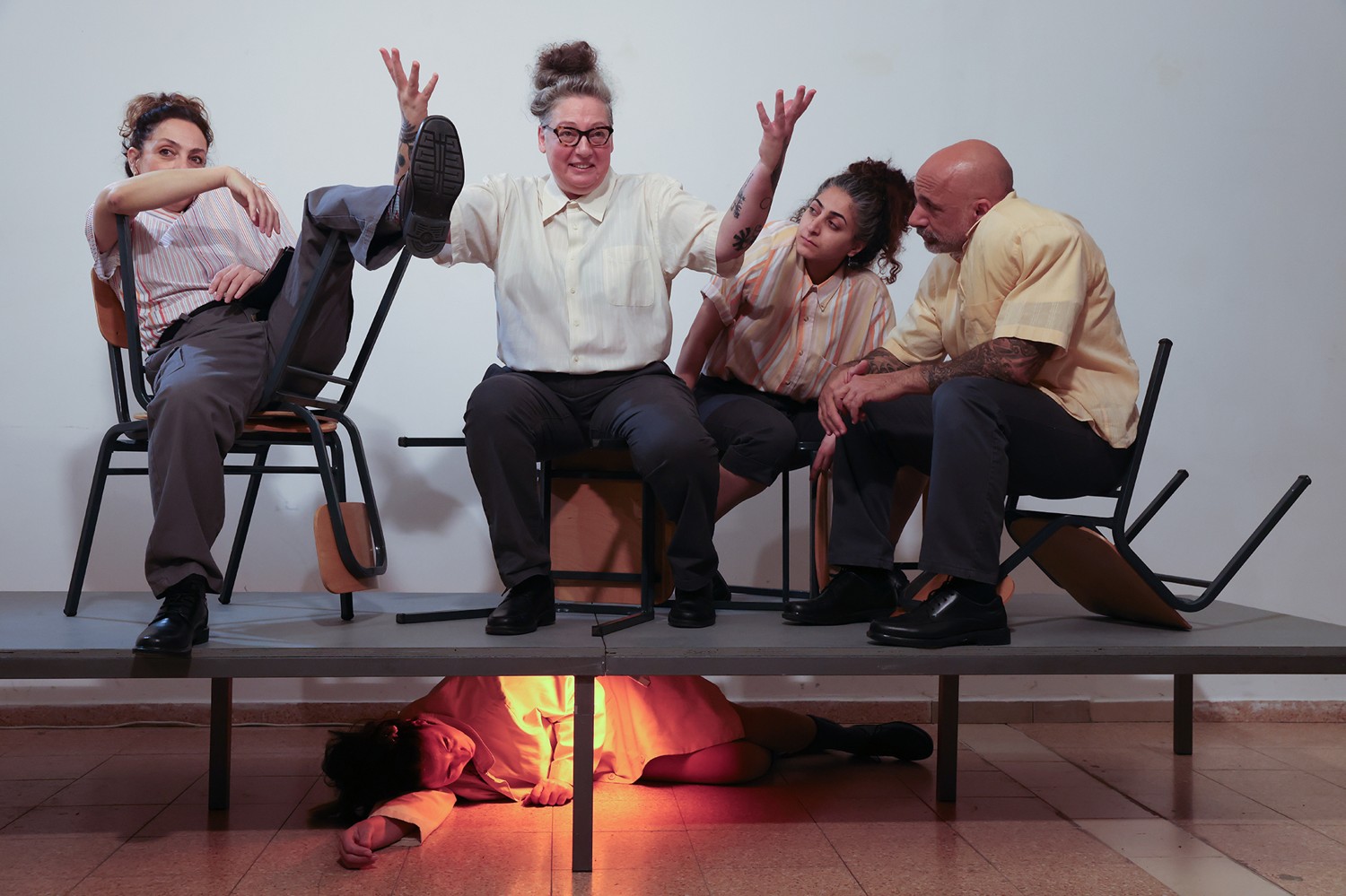
When Kafka Says “We”

Texts by Franz Kafka

Directed by Ruth Kanner

Ruth Kanner Theatre Group

“It seems to be a very old conflict – it’s probably in the blood and so perhaps will only end with blood.” Jackals and Arabs, 1917

An unexpected, surprising side of Franz Kafka is unveiled in his Hebrew notebook. The thin, blue notebook was discovered deep in the archives of the National Library in Jerusalem, and in it a list of Hebrew words and their German translations, written in Kafka’s handwriting.

This intriguing vocabulary sparked questions about collective identities, which we began to explore in Kafka’s writing. The starting point of our performance is a theatrical composition that constitutes an interpretive stage for Kafka’s world of Hebrew words. From it, some of these words sneak out, and resonate in several of Kafka’s passages and short stories – all written in 1917, the year Kafka began studying Hebrew. These texts engage with ancient, strange, wondrous extinct communities; eradicated or eradicating, struggling for their own lives.

Screaming Into a Bucket

Pantheon

Written and directed by Roey Maliach Reshef

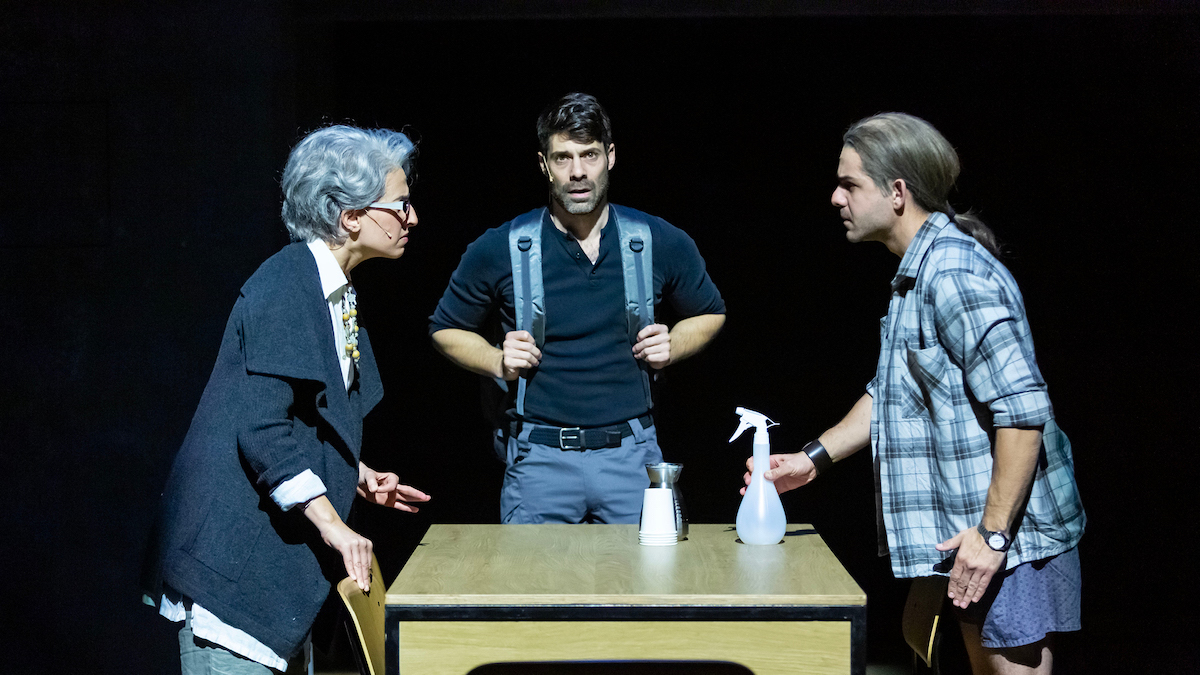
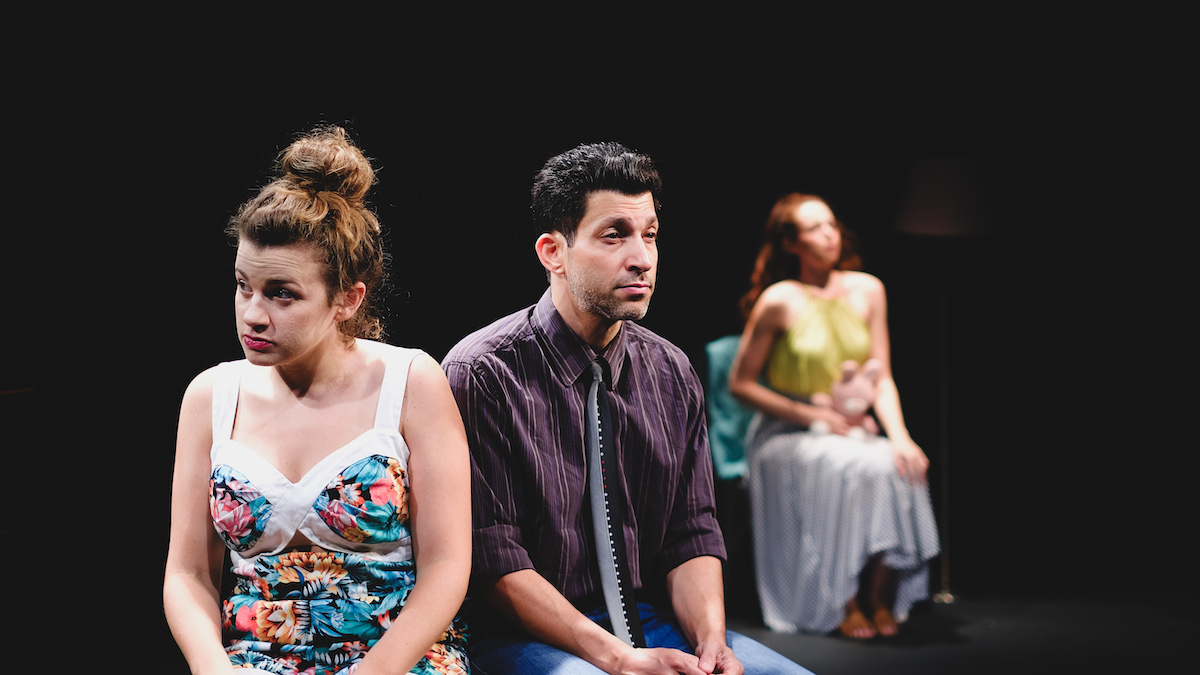
Dr. Reuven Klein is a psychologist struggling to maintain his professional composure, while helping three deeply troubled patients: Liat battles explosive rage attacks and crippling anxiety, convinced her partner is unfaithful; Arik, Liat’s increasingly distant boyfriend, desperately seeks meaning in their deteriorating relationship; and Anna, newly arrived in the big city, spirals into isolation and paranoia, believing Japanese agents have replaced her beloved cat with a robot. This brilliant dark comedy interweaves the patients’ fractured realities with their psychological treatment sessions. As Dr. Klein attempts to untangle their neuroses, he finds himself drawn into their delusions, gradually losing his own grip on reality. The boundaries between therapist and patients blur dangerously when all three patients appear simultaneously in his office, creating a cacophony of overlapping voices. Drawing inspiration from chaos theory, quantum mechanics, and the surreal literary landscapes of Haruki Murakami, this extraordinary four-actor play creates a universe where thought, time, and reality constantly shift. The performance holds an unflinching mirror to human vulnerability and the universal anxieties that connect us all.

The Israeli Patient

Kvutsat Avoda (Work Group)

Written by Noam Gil

Directed by Yigael Sachs

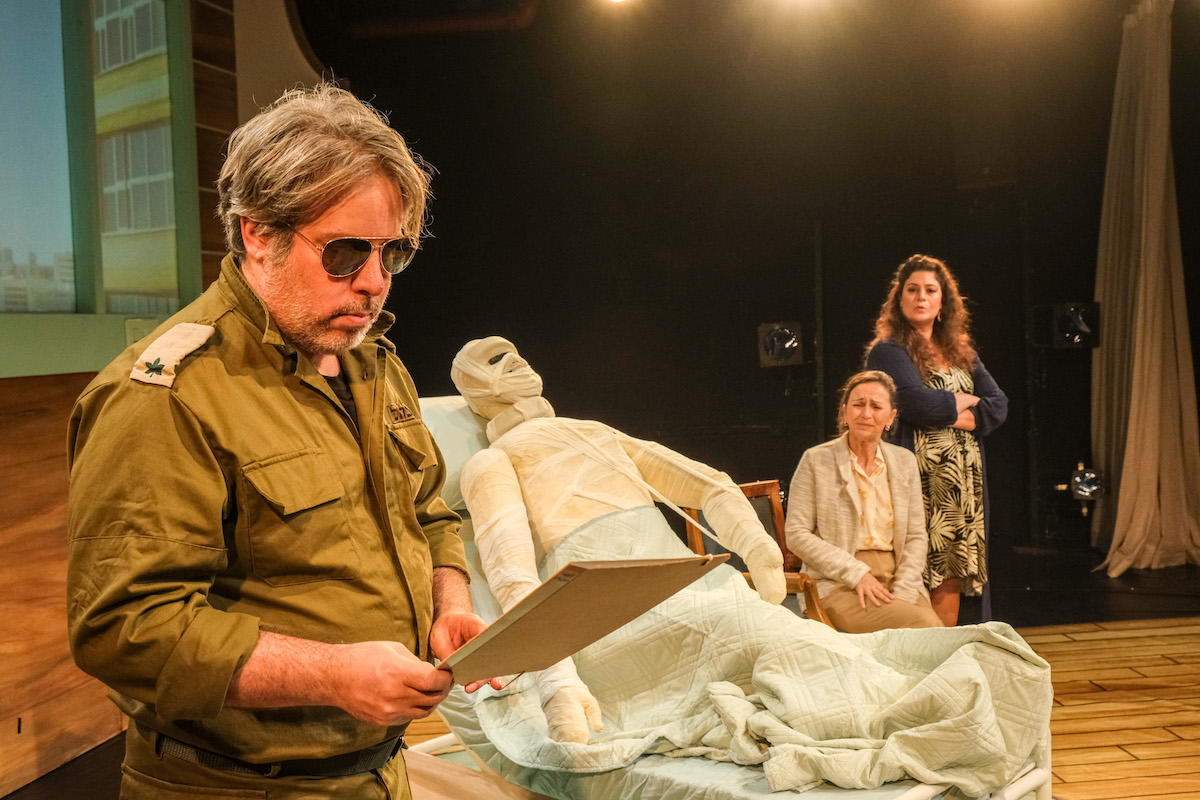
Two women sit anxiously beside the bed of a severely injured patient, whose body is covered in plaster casts. The women, the patient’s mother and wife, pray for his recovery and find comfort in visits from important people. But something doesn’t add up: why is their patient in particular getting such special treatment? The wife is convinced that everyone has gone mad or there’s a mix up in the room, but the mother goes along with it. What begins as a dark comedy of errors, becomes a strange journey that blurs the distinction between the sick and the healthy, the insane and the sane. The two women will be forced to ask themselves who the “Israeli patient” really is, and what is hidden behind the layers of plaster concealing his identity. 

The Israeli Patient is a play about the stories we tell ourselves in order to cope with the disease called “reality.”

Not the End of the World

Kvutsat Avoda (Work Group)

Written and directed by Yigael Sachs

Michael, a science teacher, falls in love with Noa, his former student, but Noa is still in love with Zohar, a charismatic social media star, who successfully promotes Flat Earth Theory while breaking Noa’s heart. Inspired by the ghost of the cynical and restless Galileo Galilei, Michael competes for Noa’s heart. Noa decides that a broken heart isn’t necessarily the end of the world, and together they embark on a journey to Antarctica to discover if this world has an end. Zohar decides to pursue a political career to “prove” that the world is flat, the sky is the limit, and people are the center of the universe.

A combination of social satire, romantic comedy, and a contemporary fairy tale, set in an era where fiction can be considered scientific facts, lies replace truth, and media stars become politicians and leaders, while intellectuals find themselves conforming, through silence or action, to alternative facts and conspiracy theories in order to survive the hellfire of modern inquisition.

Permitted to Anyone

Beer Sheva Theatre

Written and directed by Aya Kaplan

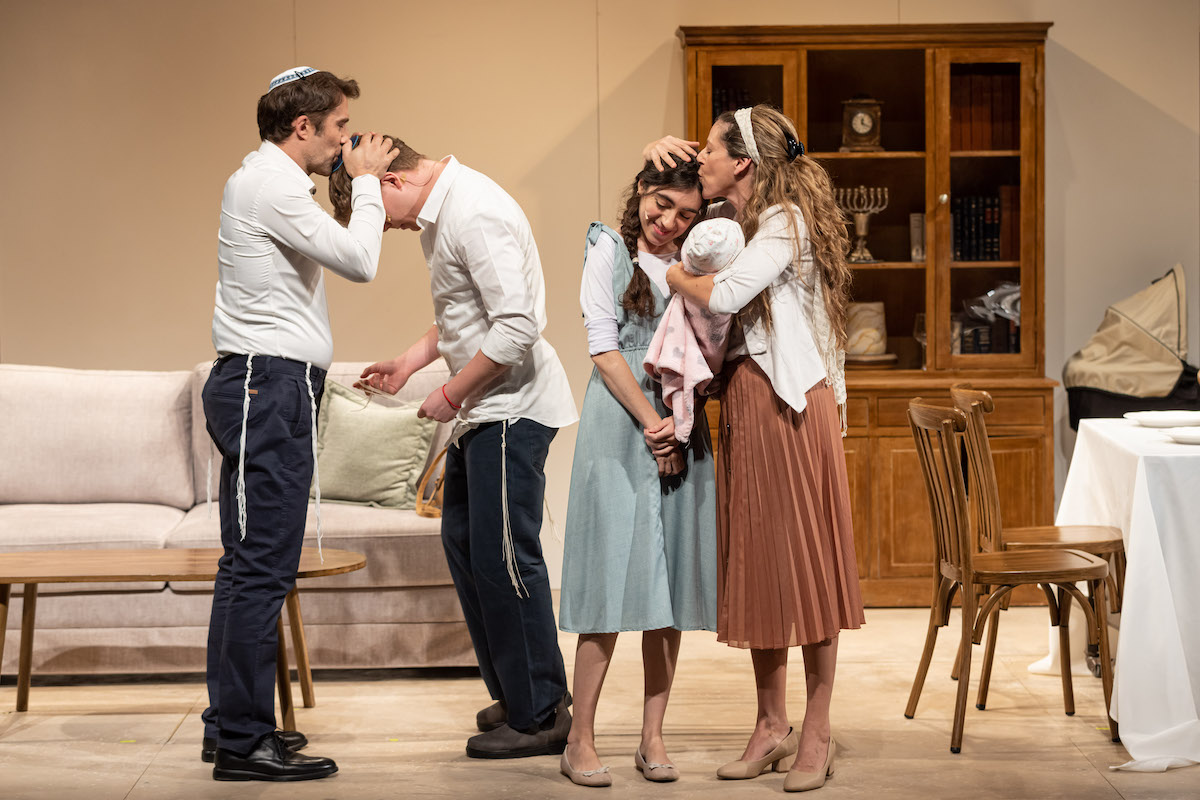
When Effie, a liberal religious woman in her late thirties, decides to end her unhappy marriage to Boaz, the heavens fall down on her. Her husband, a successful high-tech worker and a reserve battalion commander, flatly refuses to grant her a divorce. He turns the entire religious-community they live in against her, leaving her isolated. Effie fights for her freedom in the rabbinical court, facing religious laws that are thousands of years old. When the marital struggle expands and threatens to tear the entire community apart, Effie realizes that in order to be free, she must go to war. 

In Israel, thousands of women struggle every day for the right to be free. The play was created after a long in-depth investigation that included conversations with women who have been refused a divorce, and with rabbinical advocates and social workers from Yad La’isha, an organization that works day and night to help these women break free.

Too Soon to Know

Homemade Ensemble

Written by Yoav Bartel

Directed by Abigail Rubin and Yoav Bartel

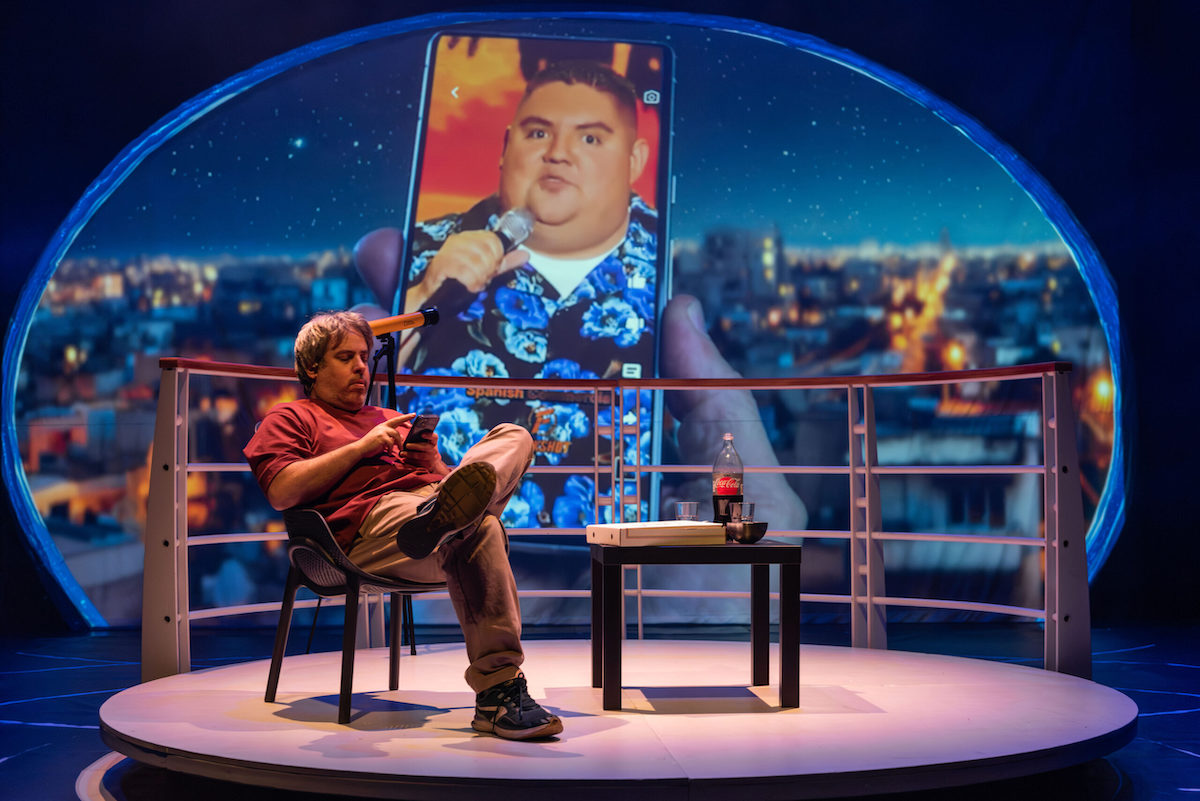
During a war, a theatre creator travels to an evacuees’ hotel at the Dead Sea, determined to meet his audience. While waiting in the lobby, he falls asleep and dreams of a journey with his creative partner and their ensemble to a festival abroad. The dream becomes a voyage across countries, anxieties, and fantasies of a theatre artist who insists on creating even when the cannons roar and the muses are, supposedly, silent.

Too Soon to Know seeks to decipher the mental and emotional state when attempting to articulate experience during war. Is it possible to create imagery under a heavy fog? How should one guide an audience to a safe space during a theatrical performance? What holds more significance: a children’s play about fear or a balloon-blowing workshop? Who is the traitor, the one who leaves a production for the sake of creation, or the one who abandons the spirit of creation for the sake of the group? Can dreams be realized under fire? How will the creator cope without creation, and how does creation survive without the creator?

Mickey Saves the Day

Directed by Amit Apte

Written by Yaron Edelstein

Mickey, a young ISA agent and Israeli patriot, is sent on a top-secret mission: to travel in a time machine back to November 1995, and save the life of Prime Minister Yitzhak Rabin. Unexpectedly, in mid-1990s Tel Aviv, Mickey meets his future parents, and tries to prevent the betrayal that will ruin their marriage – only to discover a deeper and darker betrayal that he could never have imagined.

After the success of Ringo, playwright Yaron Edelstein, director Amit Apte, and the Cameri | New Generation Group collaborate once again, in a political sci-fi comedy.